
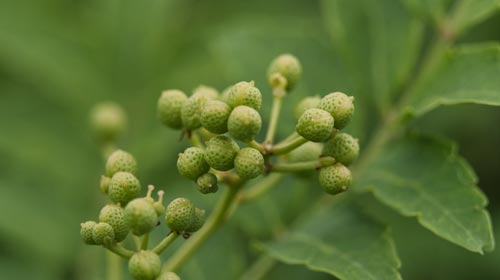
Once you have felt it on your tongue, you will not soon forget it: Sansho, Japanese mountain pepper, does not just tickle with heat, but with a unique tingling sensation – as if a fresh hint of lemon were to give way to fine electric shocks. This spice is one of Japan's oldest – and at the same time one of the most underrated.
What is Sansho?
Botanically speaking, Sansho (山椒) does not belong to the pepper family, but to the genus Zanthoxylum, just like the better-known Chinese Sichuan pepper. Both are closely related, but differ in aroma and intensity. Sansho grows on a small, thorny bush that is native to the Japanese mountains. The dried green or brown husks of the ripe fruits are primarily used – these contain the distinctive essential oil "sanshool", which creates the characteristic tingling sensation on the lips and tongue.
Typical of Sansho is its citrusy freshness – somewhere between yuzu, lime, and camphor – combined with a mild, almost cooling heat. This interplay of aromas makes it unique – and for many Western palates, curiously fascinating.
An Old Story: Sansho in Japanese Cuisine
Sansho is one of Japan's oldest documented spices. It was already mentioned in historical texts such as the "Nihon Shoki" in the 8th century – then both as a seasoning and as a medicinal plant. It was considered to aid digestion, warm the body, and invigorate.
In traditional cuisine, Sansho is found primarily in two forms:
-
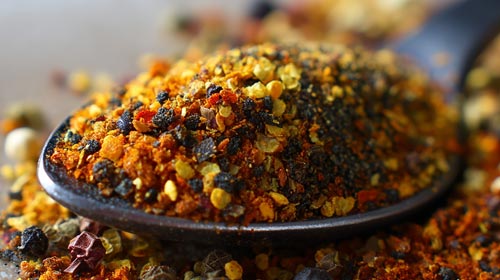
Ground as a powder (kona-zansho) – usually sprinkled over rich dishes such as eel (unagi), chicken, or pork
-
In the famous Shichimi-Togarashi spice blends – as a citrusy, tingling component
The young leaves, called "kinome", are also used – for example in miso pastes, dressings, or as a garnish for spring dishes.
Origin – Where Sansho Grows
Sansho grows wild in the forest-rich, mountainous regions of Japan – especially in Wakayama Prefecture, which is still considered a stronghold of its cultivation. There, small family farms produce genuine quality products, often still harvested and processed by hand. The timing of the harvest is crucial: For a delicate lemon note, the fruits are harvested green and unripe; for a more intense aroma, they are left to ripen and darken.
Today, some organic farms are working to bring Sansho back into focus – as a regional super-spice with history and character.
What Does Sansho Taste Like?
Sansho is not a pepper in the classic sense. Its heat is not biting, but subtle. What sets it apart is the combination of:
-
Citrusy freshness – especially in the green stage
-
Slightly bitter depth – in ripe husks
-
Electrifying numbness – a tingling sensation in the mouth
-
Lightness – ideal with rich dishes, as it elegantly balances them
Sansho is not only suited to Japanese cuisine. It is also gaining importance in modern fusion cuisine – for example in chocolate desserts, with cheese, or in cocktails. And anyone who has tried a soft-boiled egg with a hint of Sansho and butter knows: Sometimes it does not take much to be surprised.
Sansho Today – The Return of an Old Spice
In Japan, Sansho is currently experiencing a minor renaissance. Young chefs are rediscovering the spice, experimenting with applications beyond the classics. Interest is also growing in Europe – not least due to curiosity about authentic, natural aromas beyond chili and black pepper.
The challenge: Good Sansho is rare. It quickly loses its aroma if it is dried too hot or too quickly. That is why gentle processing and fresh storage are essential – a reason why high-quality products usually come from small producers.
Sansho is not a loud spice – but it is an impressive one. With its delicate heat, lemony character, and slight tingling on the tongue, it tells of old trees in Japan's mountain forests, of centuries-old culinary art, and of the courage to try something new.
It is not a substitute for pepper – but a world of its own. One that can be explored. With curiosity. And with an open palate.

Leave a comment
This site is protected by hCaptcha and the hCaptcha Privacy Policy and Terms of Service apply.