
Wood-fired Chawan – signed matcha bowl in Wan-nari form

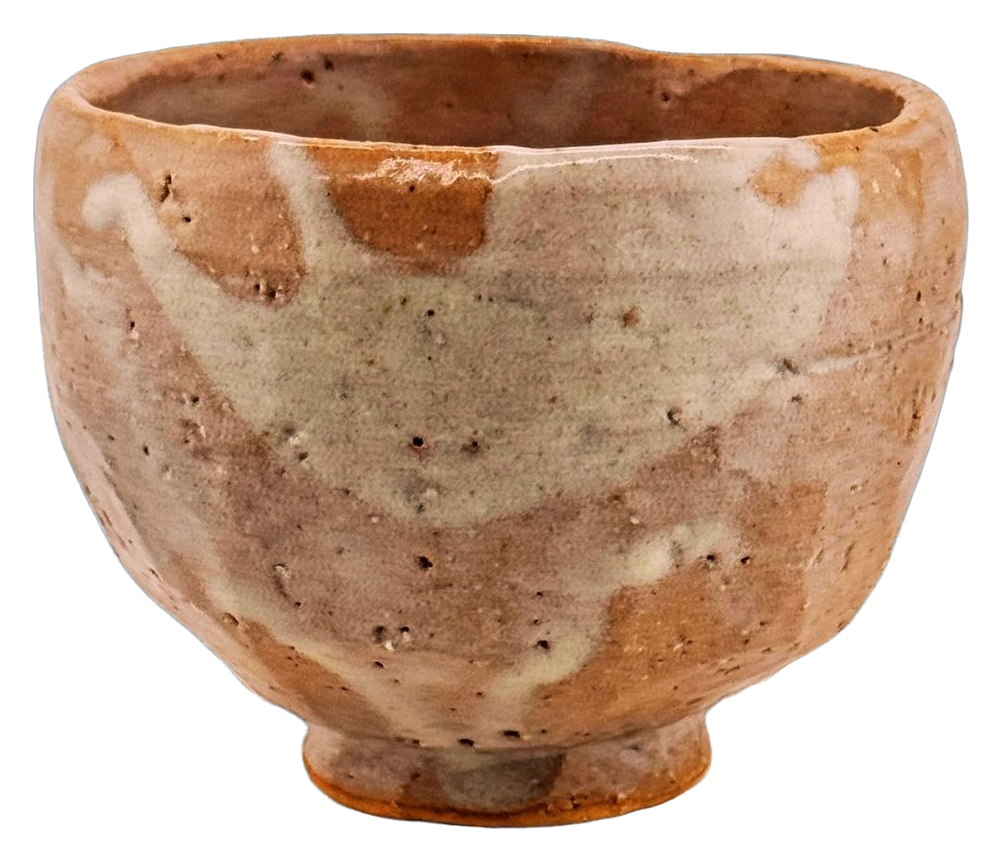
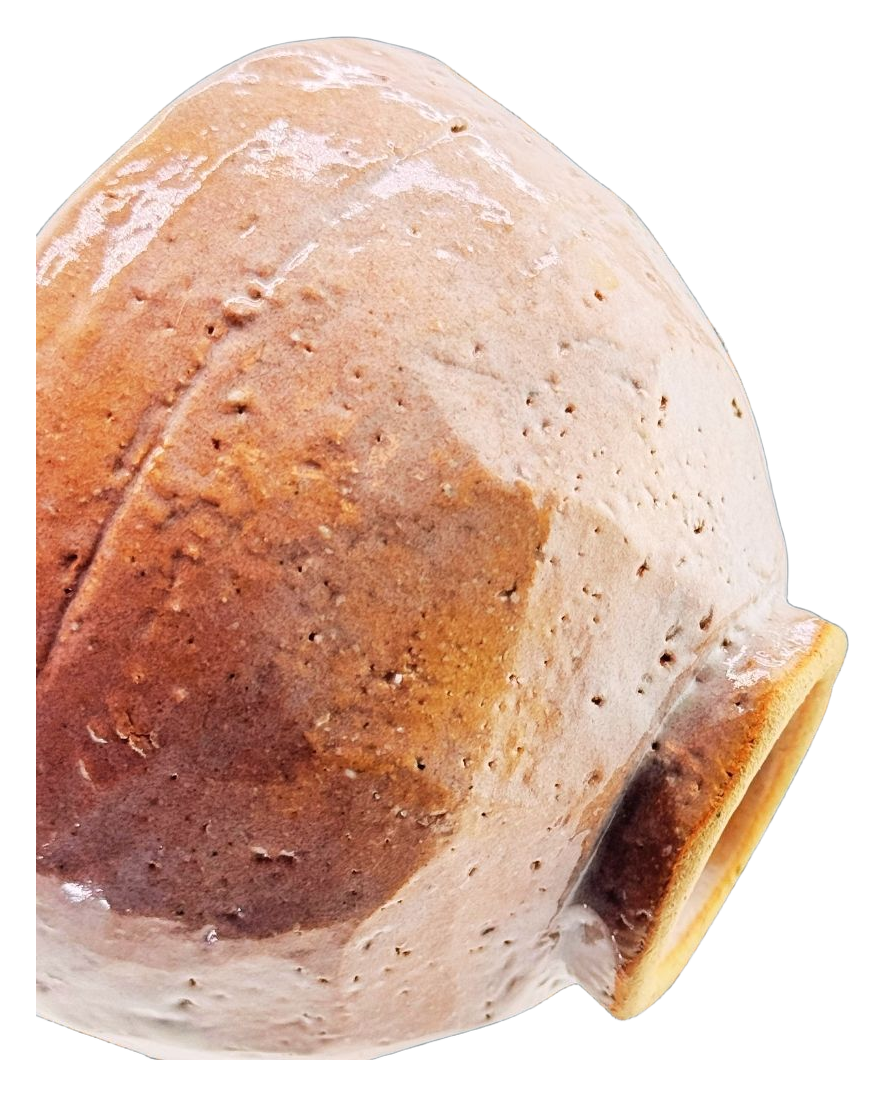
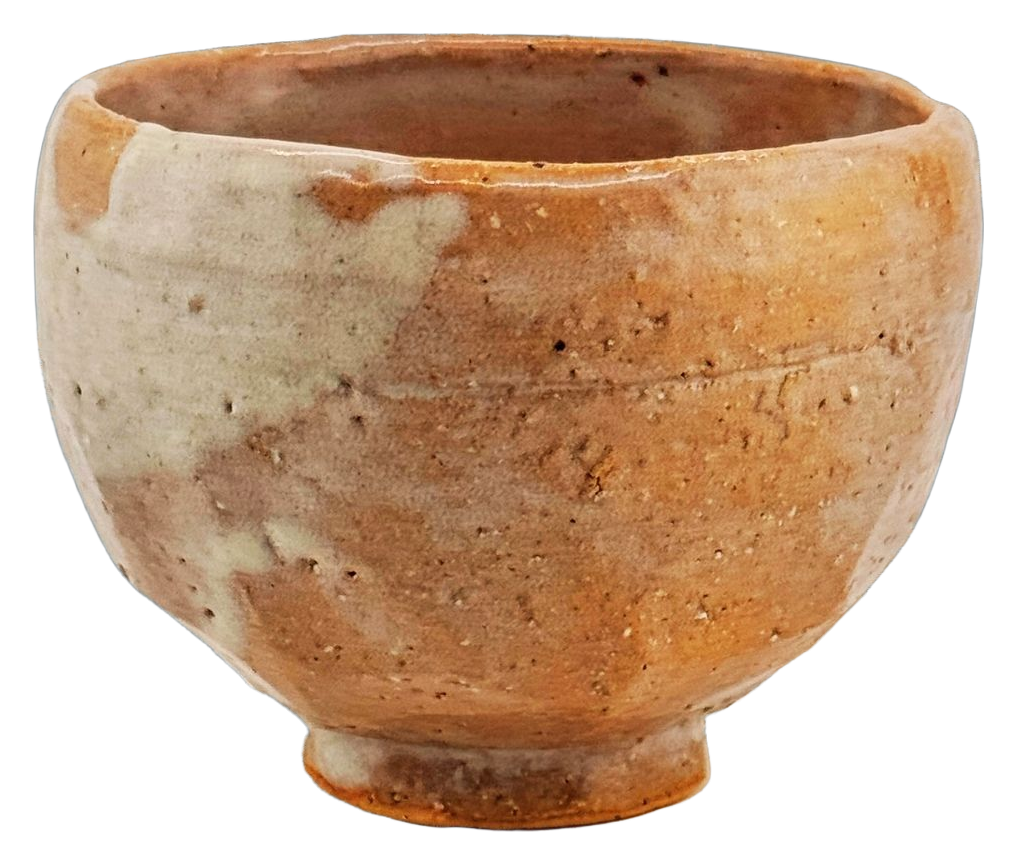
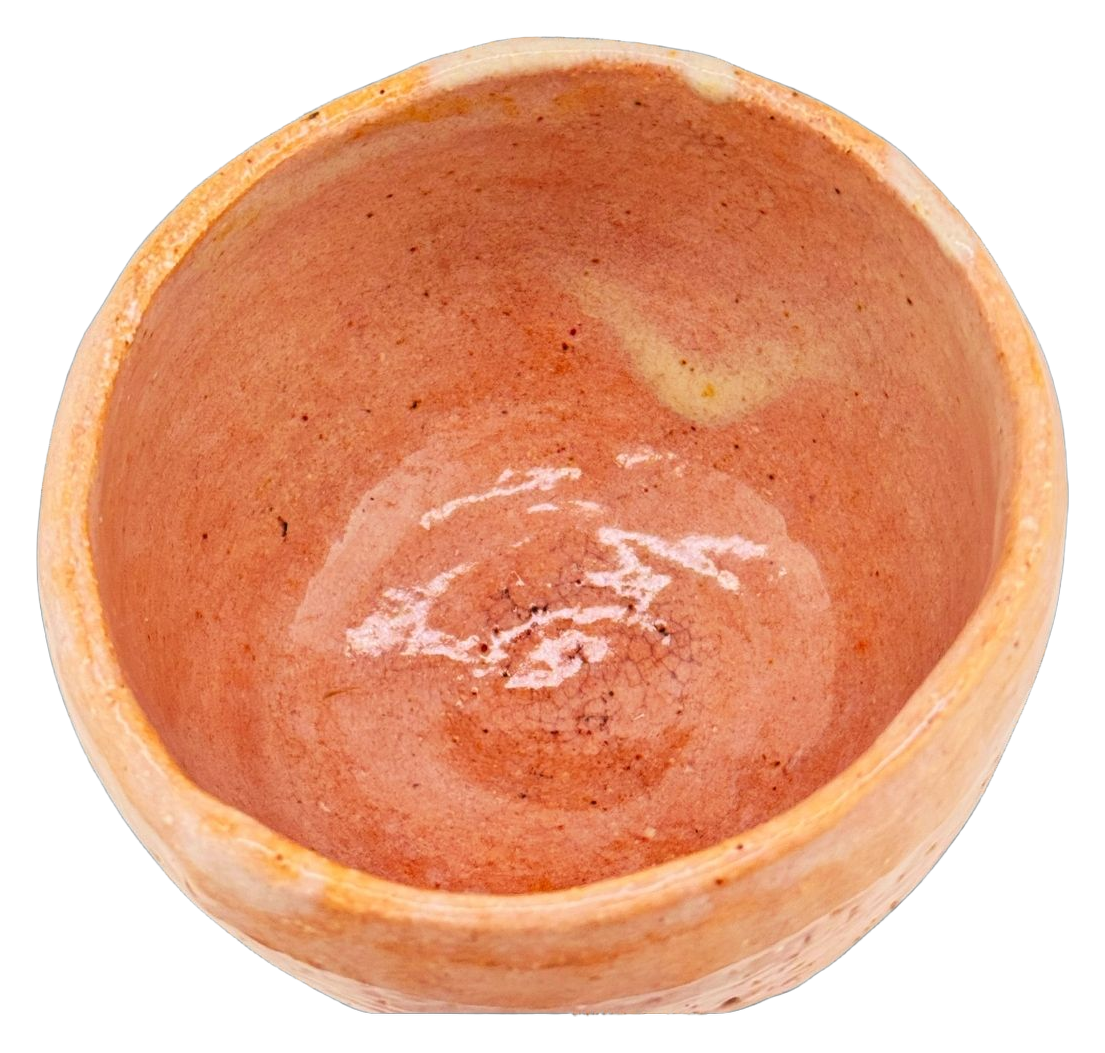
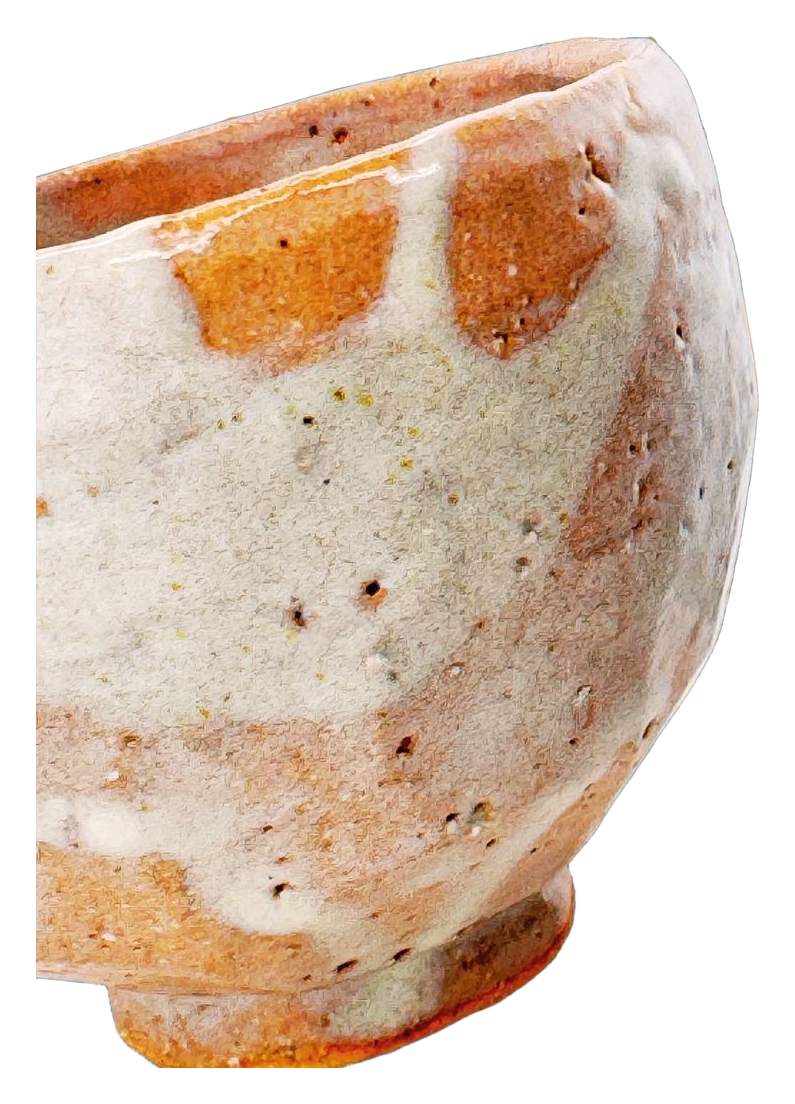
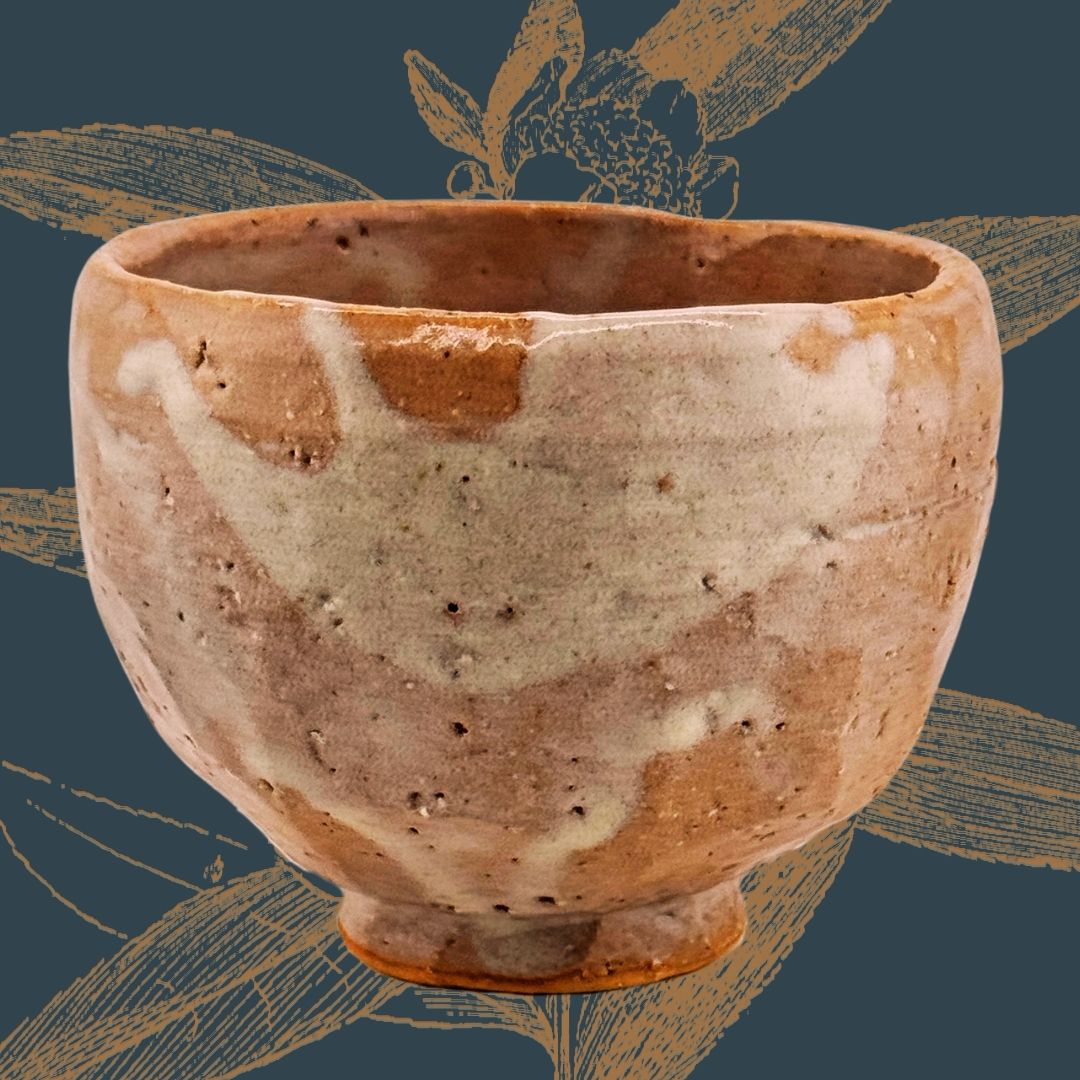
When Fire Leaves Its Mark – A Chawan Like a Quiet Sunrise This matcha bowl looks as though it has absorbed the light of an entire day. Its warm, vibrant surface features a play of orange, ochre, and soft cream – a color palette that can only be created in a traditional wood-fired kiln. The open pores, small fire marks, and cloudy ash deposits suggest a natural 灰被 (Hai-kaburi) ash glaze. The clay appears not merely shaped, but marked by fire. It is precisely this blend of ruggedness and poetry that makes wood-fired ceramics so highly prized. A Form That Grows from the Hand The slightly irregular curve, the open, deliberately asymmetrical rim, and the compact, modeled foot clearly indicate a chawan in 椀形 (Wan-nari) form. It sits securely in the hand, feeling organic and soft without losing its presence. The kodai is not perfectly cut, but shaped – a sign that the bowl was not industrially produced, but formed fluidly and freely. At the foot, slight traces of the throwing process are visible, partially softened by the wood firing. The Signature – A Personal Mark A clearly impressed signature is visible on the foot. The brushstroke appears expressive and individual, not like a mass-produced stamp. Such marks are found on the work of Japanese studio artists who deliberately work between modern freedom and traditional craftsmanship. This chawan is unmistakably a signed unique piece, bearing the potter’s handwriting like a small story known only to him and the bowl. Warmth That Flows into the Hands Inside, your chawan reveals a soft, lustrous orange with fine 貫入 (Kannyū) – delicate, natural crazing typical of wood-fired ceramics. When you whisk matcha in it, the surface catches the light, making the green color appear particularly vivid. The curve guides the chasen without resistance. Every movement feels calm and natural. This bowl does not merely invite you to drink matcha – it creates an atmosphere that slows you down. Features You Can See and Feel The ash deposits, the flowing glaze, the open pores, the interplay of matte and lustrous areas – all of this can only be achieved in a wood firing, not in a gas or electric kiln. Your bowl is as rugged as earth, as warm as terracotta, and as vibrant as if shaped by fire. It is not decorated ceramic, but a piece of living craftsmanship. A true wabi-sabi vessel. Why This Chawan Is Perfect for Matcha The generous Wan-nari form, the organic interior curve, and the warm color palette make it ideal for matcha tea and your ritual. Green matcha appears particularly vivid in this bowl. The form makes whisking easier, the clay maintains a pleasantly consistent temperature, and the sensation of drinking connects you with the moment. Whether you want to buy matcha, drink matcha, or find a new matcha bowl – this vessel adds depth to every sip. Product: Matcha Bowl (Chawan 茶碗)Color: Natural Tones in Orange, Ochre, Cream; Ash GlazeOrigin: Japanese Studio Ceramics, Signed Unique PieceTradition: Wood Firing, Wabi-Sabi, Wan-Nari 椀形Material: Stoneware, Partially Naturally Glazed (灰被 Hai-Kaburi)Form: Wan-Nari Chawan, Organic RimKodai: Hand-Modeled, SignedPackaging: Gift Box This bowl belongs to a tradition of tea enjoyment that has been carefully nurtured for generations.
read more
Sale price€219,90 EUR
In stock Delivery within Germany: 3–5 working days Free shipping
Waitlist

Let me know when it is back.

We will send you one email as soon as this item is available again.

Holzbrand Chawan – signierte Matchaschale in Wan-nari Form – Ansicht 1
Wood-fired Chawan – signed matcha bowl in Wan-nari form €219,90

One availability email only. No newsletter. Privacy

FAQ

Was ist Holzbrand Chawan – signierte Matchaschale in Wan-nari Form?
Wenn Feuer Spuren schreibt – eine Chawan wie ein stiller Sonnenaufgang Diese Matcha Schale wirkt, als hätte sie das Licht eines ganzen Tages eingesogen.
Woher stammt diese Matcha Schale und wie ist sie gefertigt?
Deine Bilder zeigen eine warme, lebendige Oberfläche aus Orange, Ocker und sanftem Cremeweiß – ein Farbspiel, das nur in einem traditionellen Holzbrandofen entsteht. Der Ton scheint nicht nur geformt, sondern vom Feuer gezeichnet worden zu sein. Genau diese Mischung aus Rauheit und Poesie macht Holzbrandware so begehrt.
Aus welchem Material bzw. welchen Bestandteilen besteht diese Matcha Schale?
Deine Bilder zeigen eine warme, lebendige Oberfläche aus Orange, Ocker und sanftem Cremeweiß – ein Farbspiel, das nur in einem traditionellen Holzbrandofen entsteht. Der Ton scheint nicht nur geformt, sondern vom Feuer gezeichnet worden zu sein.
Wie verwende ich diese Matcha-Schale bei der Zubereitung?
Die Form erleichtert das Aufschlagen, der Ton hält die Temperatur angenehm konstant und das Gefühl beim Trinken verbindet dich mit dem Moment.
Welche Form, Glasur oder gestalterischen Merkmale hat diese Chawan?
Die Aschespuren, die fließende Glasur, die offenen Poren, das Wechselspiel aus matten und glänzenden Bereichen – all das entsteht nur im Holzbrand, nicht in Gas- oder Elektroofen. Deine Schale ist rau wie Erde, warm wie Terrakotta, lebendig wie vom Feuer geformt. Sie ist keine dekorierte Keramik, sondern ein Stück gelebtes Handwerk. Ein echtes Wabi-Sabi-Gefäß.
Was ist bei Holzbrand Chawan – signierte Matchaschale in Wan-nari Form enthalten?
Die Chawan ist eindeutig ein signiertes Einzelstück und trägt die Handschrift ihres Töpfers wie eine kleine Geschichte, die nur er und die Schale kennen. Sie ist keine dekorierte Keramik, sondern ein Stück gelebtes Handwerk.

Product description

When Fire Leaves Its Mark – A Chawan Like a Quiet Sunrise

This matcha bowl looks as though it has absorbed the light of an entire day. Its warm, vibrant surface features a play of orange, ochre, and soft cream – a color palette that can only be created in a traditional wood-fired kiln. The open pores, small fire marks, and cloudy ash deposits suggest a natural 灰被 (Hai-kaburi) ash glaze. The clay appears not merely shaped, but marked by fire. It is precisely this blend of ruggedness and poetry that makes wood-fired ceramics so highly prized.

A Form That Grows from the Hand

The slightly irregular curve, the open, deliberately asymmetrical rim, and the compact, modeled foot clearly indicate a chawan in 椀形 (Wan-nari) form. It sits securely in the hand, feeling organic and soft without losing its presence. The kodai is not perfectly cut, but shaped – a sign that the bowl was not industrially produced, but formed fluidly and freely. At the foot, slight traces of the throwing process are visible, partially softened by the wood firing.

The Signature – A Personal Mark

A clearly impressed signature is visible on the foot. The brushstroke appears expressive and individual, not like a mass-produced stamp. Such marks are found on the work of Japanese studio artists who deliberately work between modern freedom and traditional craftsmanship. This chawan is unmistakably a signed unique piece, bearing the potter’s handwriting like a small story known only to him and the bowl.

Warmth That Flows into the Hands

Inside, your chawan reveals a soft, lustrous orange with fine 貫入 (Kannyū) – delicate, natural crazing typical of wood-fired ceramics. When you whisk matcha in it, the surface catches the light, making the green color appear particularly vivid. The curve guides the chasen without resistance. Every movement feels calm and natural. This bowl does not merely invite you to drink matcha – it creates an atmosphere that slows you down.

Features You Can See and Feel

The ash deposits, the flowing glaze, the open pores, the interplay of matte and lustrous areas – all of this can only be achieved in a wood firing, not in a gas or electric kiln. Your bowl is as rugged as earth, as warm as terracotta, and as vibrant as if shaped by fire. It is not decorated ceramic, but a piece of living craftsmanship. A true wabi-sabi vessel.

Why This Chawan Is Perfect for Matcha

The generous Wan-nari form, the organic interior curve, and the warm color palette make it ideal for matcha tea and your ritual. Green matcha appears particularly vivid in this bowl. The form makes whisking easier, the clay maintains a pleasantly consistent temperature, and the sensation of drinking connects you with the moment. Whether you want to buy matcha, drink matcha, or find a new matcha bowl – this vessel adds depth to every sip.

Product: Matcha Bowl (Chawan 茶碗)
Color: Natural Tones in Orange, Ochre, Cream; Ash Glaze
Origin: Japanese Studio Ceramics, Signed Unique Piece
Tradition: Wood Firing, Wabi-Sabi, Wan-Nari 椀形
Material: Stoneware, Partially Naturally Glazed (灰被 Hai-Kaburi)
Form: Wan-Nari Chawan, Organic Rim
Kodai: Hand-Modeled, Signed
Packaging: Gift Box

This bowl belongs to a tradition of tea enjoyment that has been carefully nurtured for generations.