
Japanese Matcha Tea Bowl – Han tsutsu-gata Coal Orange Raku (Vintage, 1960s–70s)

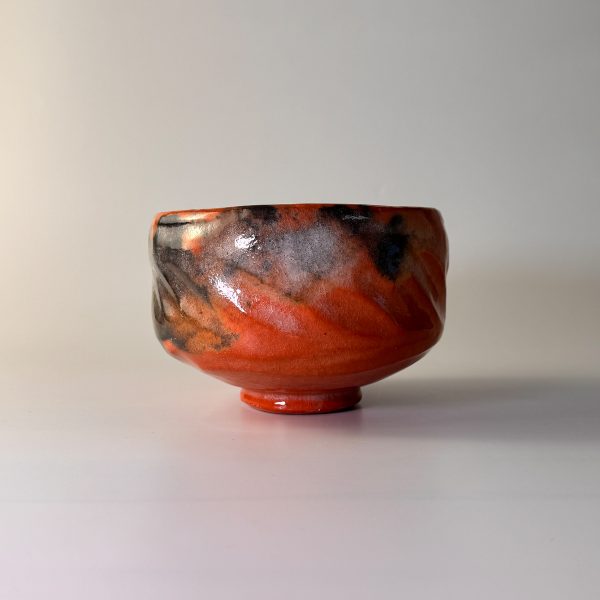
Unique Raku ceramics from Japan This handmade matcha bowl, also known as chawan, originates from Japan and is crafted in the Han tsutsu-gata half-cylinder shape (半筒型). With its spiral conch base, the so-called Kaijiri Kodai (貝尻高台), it embodies traditional Japanese craftsmanship from...
Sale price€249,00 EUR
In stock Lieferzeit 2–4 Werktage Versandkostenfrei
Waitlist

Let me know when it is back.

We will send you one email as soon as this item is available again.

Japanische Matcha Teeschale – Han tsutsu-gata Coal Orange Raku (Vintage, 1960er–70er Jahre) – Ansicht 1
Japanese Matcha Tea Bowl – Han tsutsu-gata Coal Orange Raku (Vintage, 1960s–70s) €249,00

One availability email only. No newsletter. Privacy

Schnelle Antworten

Was ist Japanische Matcha Teeschale – Han tsutsu-gata Coal Orange Raku (Vintage, 1960er–70er Jahre)?
Einzigartige Raku-Keramik aus Japan Diese handgefertigte Matcha Schale, auch bekannt als Chawan, stammt aus Japan und wurde in der Han tsutsu-gata Halbzylinderform (半筒型) gefertigt.
Woher stammt diese Matcha Schale und wie ist sie gefertigt?
Einzigartige Raku-Keramik aus Japan Diese handgefertigte Matcha Schale, auch bekannt als Chawan, stammt aus Japan und wurde in der Han tsutsu-gata Halbzylinderform (半筒型) gefertigt. Mit ihrem Spiral-Muschel-Fuß, dem sogenannten Kaijiri Kodai (貝尻高台), verkörpert sie die traditionelle japanische Handwerkskunst der 1960er bis 1970er Jahre.
Aus welchem Material bzw. welchen Bestandteilen besteht diese Matcha Schale?
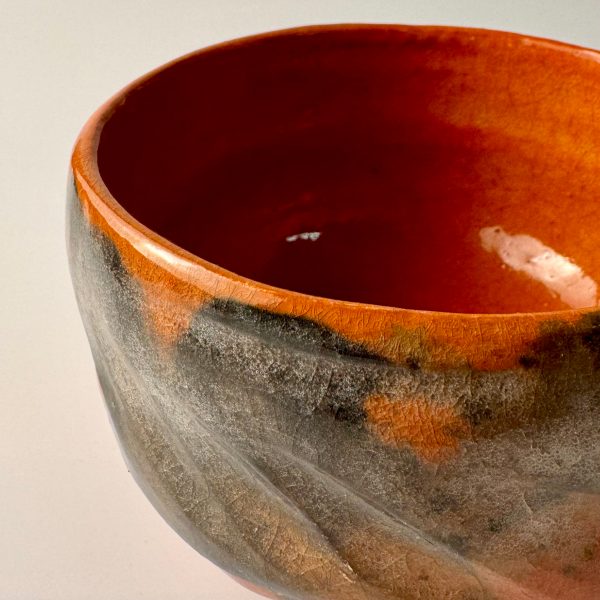
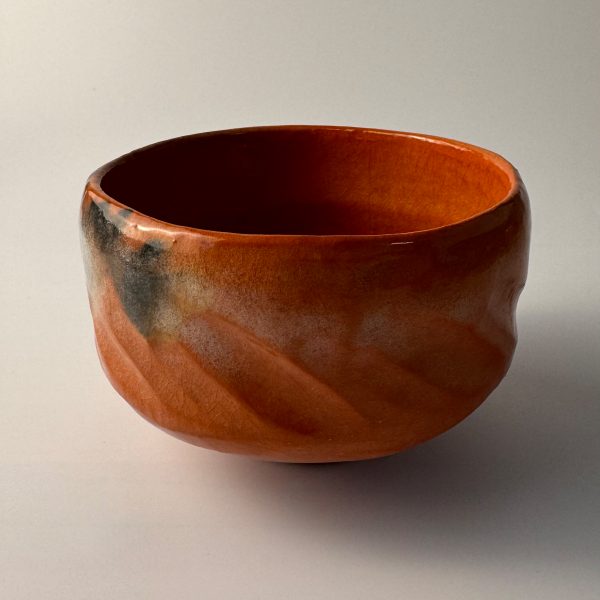
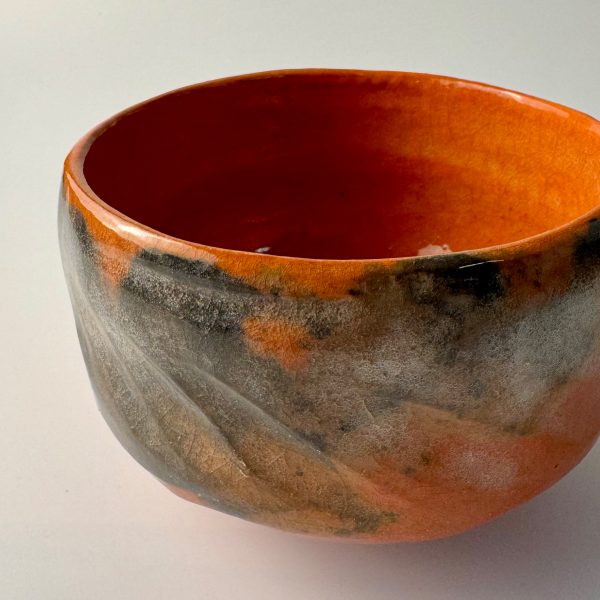
Einzigartige Raku-Keramik aus Japan Die Raku-Keramik dieser Matchatasse besticht durch ein leuchtendes Orange-Rot, durchzogen von kohlegrauen Sprenkeln und einem sanften Verlauf in Schwarz und Grau.
Wie verwende ich diese Matcha-Schale bei der Zubereitung?
Die ausgewogene Form und das Gewicht unterstützen die traditionelle Zubereitung von Matcha-Tee. Um die Schönheit dieser original japanischen Keramik zu bewahren, sollte die Schale ausschließlich mit lauwarmem Wasser gereinigt werden. Vermeide die Verwendung von Seife oder Spülmittel sowie plötzliche Temperaturwechsel, um die Glasur zu schützen.
Wie pflege und lagere ich diese Matcha-Schale?
Um die Schönheit dieser original japanischen Keramik zu bewahren, sollte die Schale ausschließlich mit lauwarmem Wasser gereinigt werden. Vermeide die Verwendung von Seife oder Spülmittel sowie plötzliche Temperaturwechsel, um die Glasur zu schützen.
Welche Form, Glasur oder gestalterischen Merkmale hat diese Chawan?
Einzigartige Raku-Keramik aus Japan Diese handgefertigte Matcha Schale, auch bekannt als Chawan, stammt aus Japan und wurde in der Han tsutsu-gata Halbzylinderform (半筒型) gefertigt. Die Raku-Keramik dieser Matchatasse besticht durch ein leuchtendes Orange-Rot, durchzogen von kohlegrauen Sprenkeln und einem sanften Verlauf in Schwarz und Grau.
Was ist bei Japanische Matcha Teeschale – Han tsutsu-gata Coal Orange Raku (Vintage, 1960er–70er Jahre) enthalten?
Mit einem Durchmesser von 12 cm, einer Höhe von 8,25 cm und einem Gewicht von 308 g liegt diese Matcha Schale angenehm in der Hand. Ein Stück japanischer Geschichte

Product description

Unique Raku ceramics from Japan

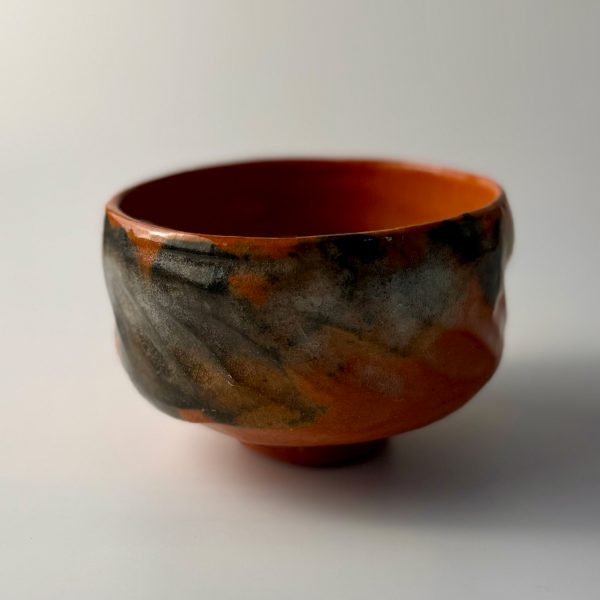
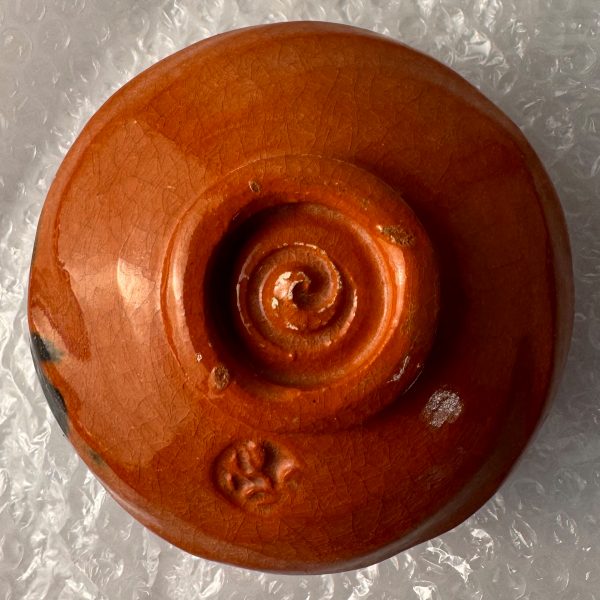
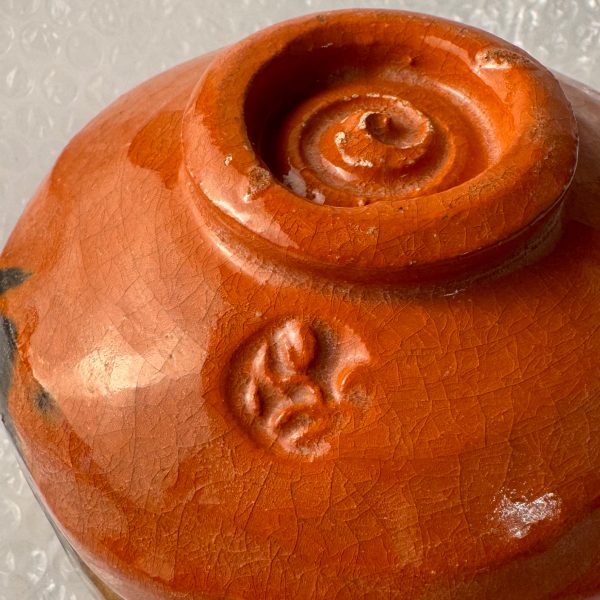
This handmade matcha bowl, also known as chawan, originates from Japan and is crafted in the Han tsutsu-gata half-cylinder shape (半筒型). With its spiral conch base, the so-called Kaijiri Kodai (貝尻高台), it embodies traditional Japanese craftsmanship from the 1960s to 1970s.

Play of colors and texture

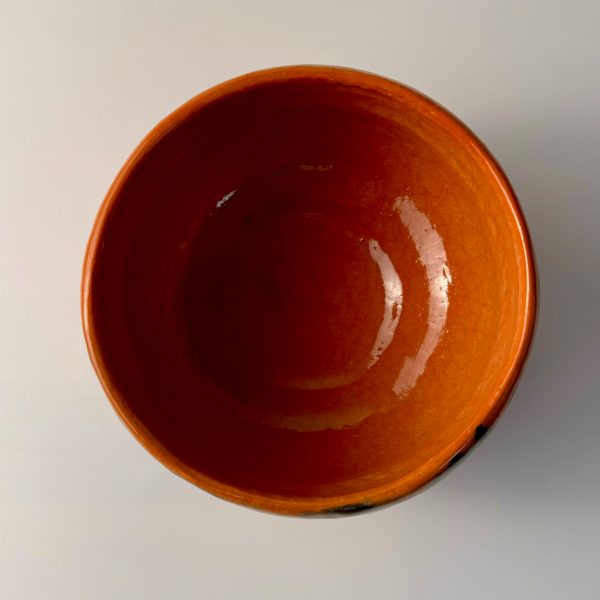
The raku ceramic of this matcha cup captivates with its vibrant orange-red hue, interspersed with charcoal gray speckles and a gentle gradient of black and gray. The glaze gives the surface depth and a vibrant texture that subtly shimmers in the light.

Dimensions and weight

With a diameter of 12 cm, a height of 8.25 cm, and a weight of 308 g, this matcha bowl sits comfortably in the hand. Its balanced shape and weight support the traditional preparation of matcha tea.

Meaning in the tea ceremony

As a vessel for matcha and other teas, this chawan plays a central role in the Japanese tea ceremony. Its semi-cylindrical shape allows for the tea aroma to develop evenly and the tea foam to develop optimally.

Care instructions

To preserve the beauty of this authentic Japanese ceramic, the bowl should only be cleaned with lukewarm water. Avoid using soap or detergent, as well as sudden temperature changes to protect the glaze.

A piece of Japanese history

This matcha bowl is more than just a tea vessel—it's an expression of centuries-old Japanese craftsmanship and culture. Every nuance in the glaze tells the story and skill of the ceramic artist.