
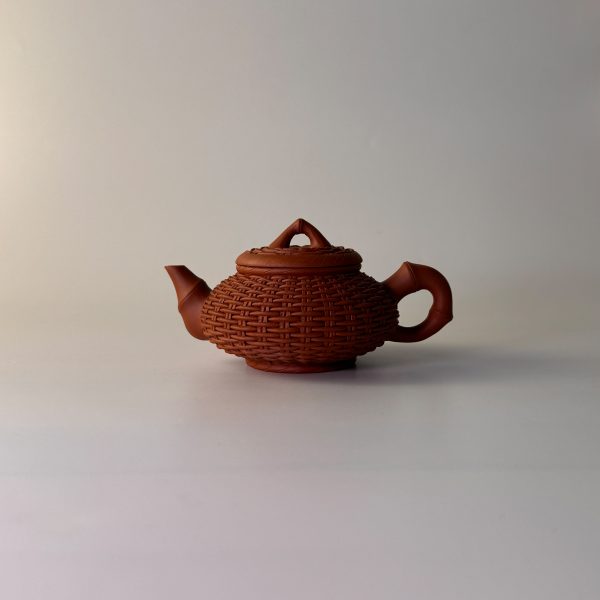
Japanese teapot Ushirode Kyusu – time cast in clay

When a teapot tells stories Some objects touch us immediately – without words, without movement. This Japanese Ushirode Kyusu teapot is one such piece. It doesn't speak aloud, but whoever holds it in their hands immediately senses: history is alive here. Presumably...
Sale price€375,00 EUR
In stock Lieferzeit 2–4 Werktage Versandkostenfrei
Waitlist

Let me know when it is back.

We will send you one email as soon as this item is available again.

Chinesische Yixing Teekanne Zisha – Zeit in Ton gegossen – Ansicht 1
Japanese teapot Ushirode Kyusu – time cast in clay €375,00

One availability email only. No newsletter. Privacy

FAQ

Was ist Chinesische Yixing Teekanne Zisha – Zeit in Ton gegossen?
Wenn ein Teegefäß Geschichten erzählt Manche Gegenstände berühren sofort – ohne Worte, ohne Bewegung.
Woher stammt diese Teekanne und wie ist sie gefertigt?
Diese klassisch chinesische Yixing - K anne chinesischen Provinz Jiangsu ist so ein Stück. Dieses Muster entsteht nicht durch Gussformen, sondern durch das präzise Arbeiten einzelner Tonsegmente, die manuell strukturiert und anschließend Stück für Stück zusammengesetzt werden. Diese Art der Gestaltung zählt zu den anspruchsvolleren Techniken innerhalb der Yixing-Keramik, weil jede Linie und jedes Segment exakt sitzen muss, damit die Form am Ende harmonisch wirkt.
Aus welchem Material bzw. welchen Bestandteilen besteht diese Teekanne?
Dieses Muster entsteht nicht durch Gussformen, sondern durch das präzise Arbeiten einzelner Tonsegmente, die manuell strukturiert und anschließend Stück für Stück zusammengesetzt werden. Diese Art der Gestaltung zählt zu den anspruchsvolleren Techniken innerhalb der Yixing-Keramik, weil jede Linie und jedes Segment exakt sitzen muss, damit die Form am Ende harmonisch wirkt.
Wie verwende ich diese Teekanne richtig?
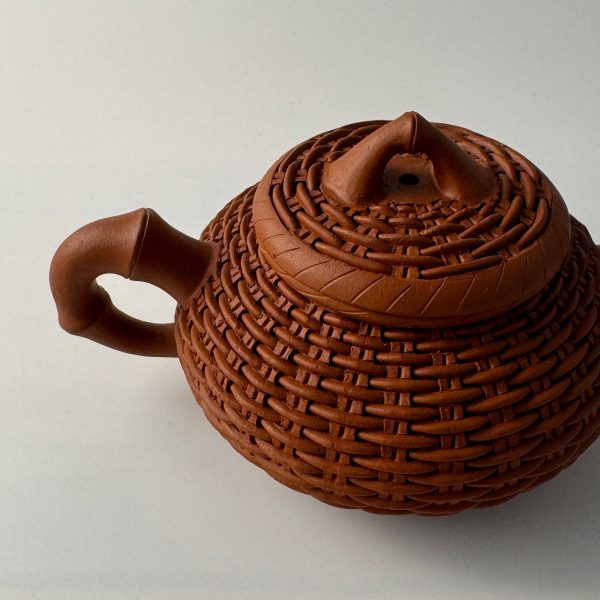
Ihr Körper ist kompakt gerundet, mit einem Schwerpunkt, der beim Ausgießen angenehm stabil bleibt. Der Griff ist leicht nach oben gezogen und bietet sicheren Halt, während der kurze, gerade Ausguss für schnelle und kontrollierte Abgüsse sorgt – ideal für Gongfu-Zubereitungen mit mehreren kurzen Ziehzeiten.
Welche Besonderheiten hat diese Teekanne?
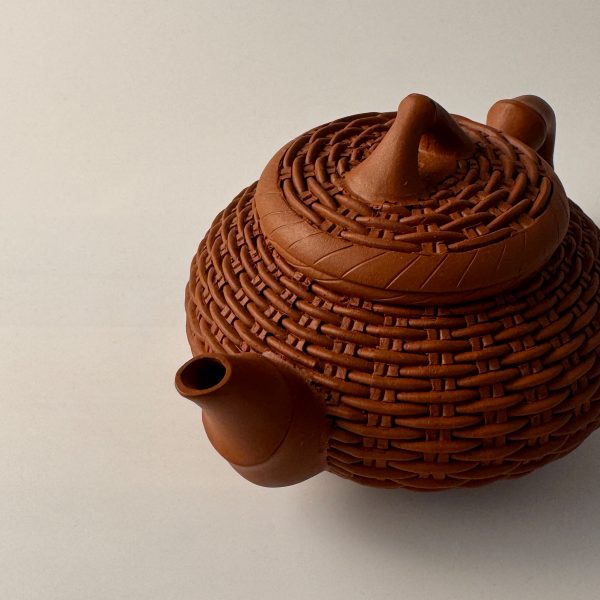
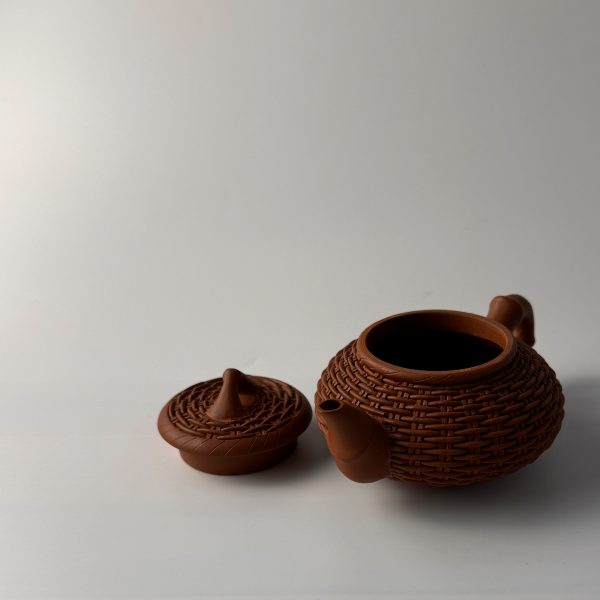
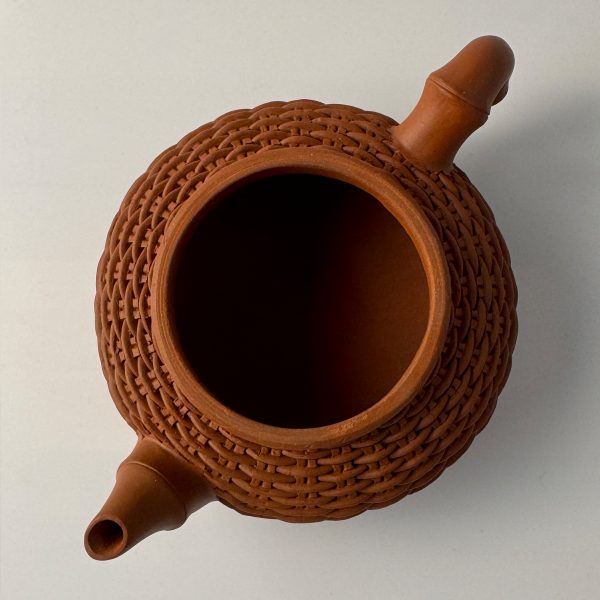
Die Oberfläche der Kanne ist ihr auffälligstes Merkmal: eine sorgfältig modellierte Flechtstruktur, die an traditionell geflochtene Körbe erinnert. Dieses Muster entsteht nicht durch Gussformen, sondern durch das präzise Arbeiten einzelner Tonsegmente, die manuell strukturiert und anschließend Stück für Stück zusammengesetzt werden. Diese Art der Gestaltung zählt zu den anspruchsvolleren Techniken innerhalb der Yixing-Keramik, weil jede Linie und jedes Segment exakt sitzen muss, damit die Form am Ende harmonisch wirkt.
Was ist bei Chinesische Yixing Teekanne Zisha – Zeit in Ton gegossen enthalten?
Diese klassisch chinesische Yixing - K anne chinesischen Provinz Jiangsu ist so ein Stück. Dieses Muster entsteht nicht durch Gussformen, sondern durch das präzise Arbeiten einzelner Tonsegmente, die manuell strukturiert und anschließend Stück für Stück zusammengesetzt werden.

Product description

When a teapot tells stories

Some objects touch us immediately – without words, without movement. This Japanese Ushirode Kyusu teapot is one such piece. It doesn't speak aloud, but whoever holds it in their hands immediately senses: history is alive here. Presumably crafted in the mid-20th century, it brings more than just tea to the table – it brings silence, respect, and a feeling of deep connection with a centuries-old tea culture.

Dobin with character – every detail with meaning

The gently curved handle on the back—typical of the Ushirode Kyusu design—seems almost like a greeting to all those who consciously take their time with their tea. The clay? Warm reddish, with natural inclusions reminiscent of earth. The surface has a slight sheen without appearing artificial. It is an expression of wabi-sabi: the beauty of imperfection.

Green tea meets fine craftsmanship

This pot is made for real green tea—for moments you don't just drink, but celebrate. Crafted in the shape of a classic Dobin , it combines function and emotion. The structure is reminiscent of leaf veins, as if the clay itself were once a plant. And perhaps that's precisely what makes it so vibrant.

An heirloom of silence

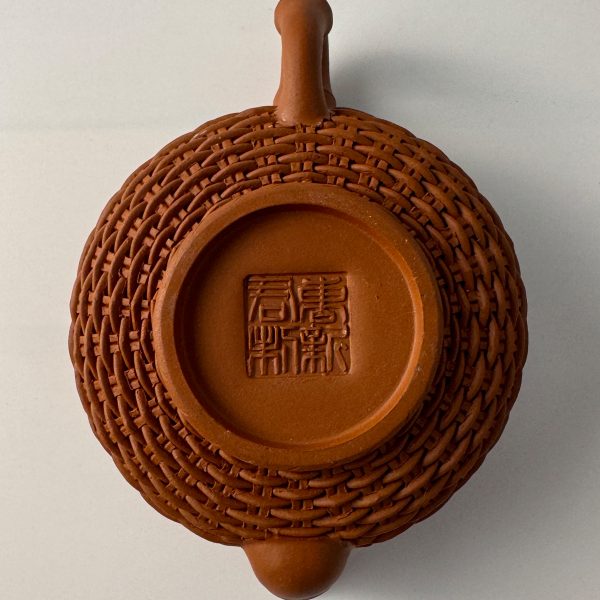
What makes this teapot so special is not only its origins, but its essence. It appears quiet, almost reserved – yet it radiates strength and tranquility. The artist's stamp on the bottom is not a brand logo, but a sign of lived dedication. It was not produced; it was created.

For your ritual – not for everyday life

Measuring 14 × 9 cm (without handle) and weighing 620 g, it feels pleasantly heavy in the hand. Not too light, not too bulky. Ideal for a small tea ceremony at home—or simply to start the morning with a breath of more mindfulness. It won't suit every kitchen. And it's not meant to. It's not made to blend in—but to accompany you.